
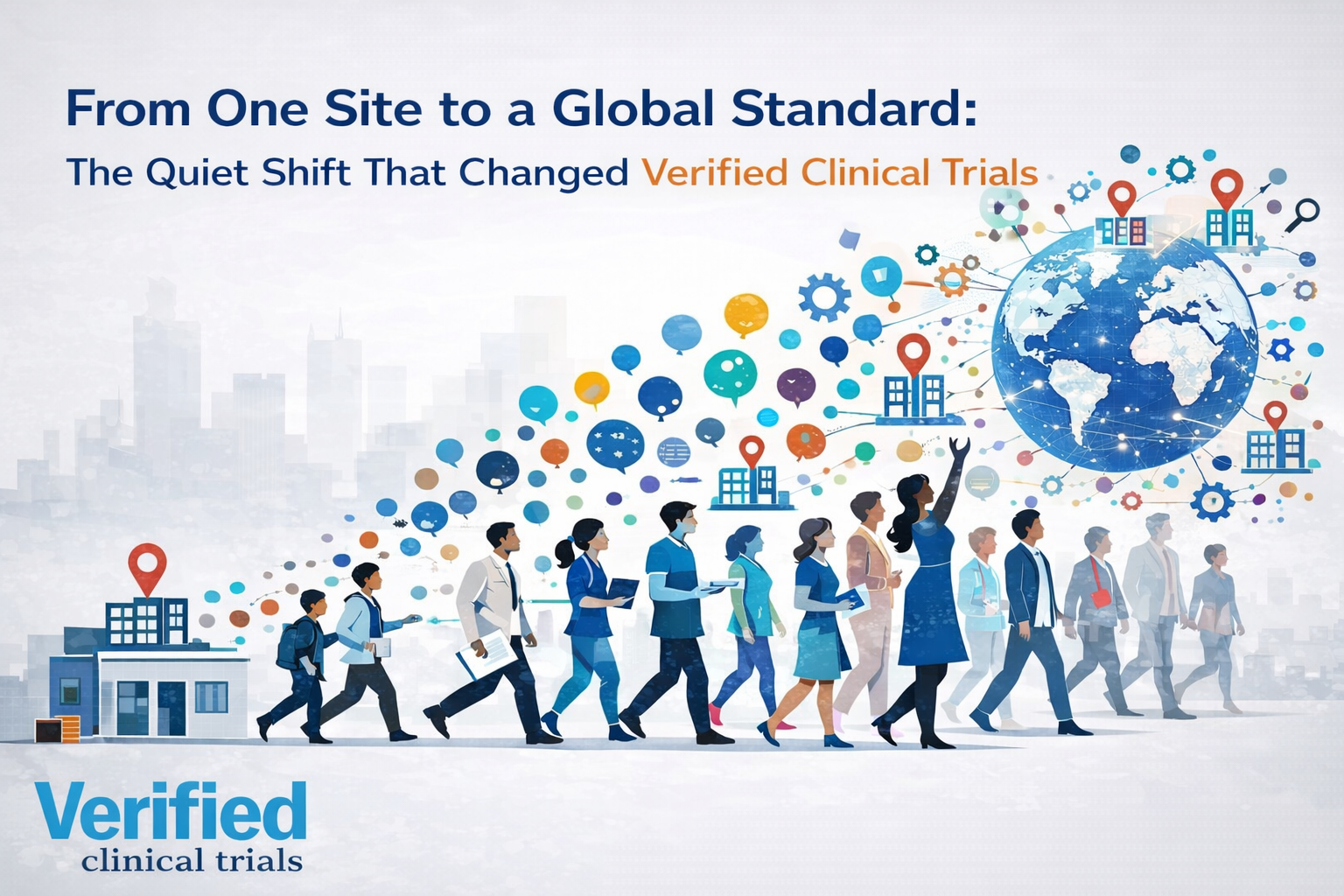
When Verified Clinical Trials began, there wasn’t a crowd waiting for us — but there were investigative sites, Phase 1 units, and forward-thinking sponsors quietly rooting for someone to build critical mass around a problem they knew was real.
They were seeing the same patterns over and over again:
- the same professional patient showing up at multiple sites
- duplicate subjects in clinical trials slipping through screening
- incomplete or selectively disclosed research histories
What was missing wasn’t awareness — it was a tool.
At the time, there was no research subject database registry that allowed sites or sponsors to look beyond a single protocol or a single sponsor’s trial. Screening depended almost entirely on self-reported history, paper records, and trust — even as studies became more competitive, more global, and more compressed.
As a result, trials weren’t failing because the science was flawed.
They were failing because the wrong subjects were being enrolled — subjects whose prior participation couldn’t be seen, verified, or reconciled across studies.
VCT didn’t begin as a polished solution.
It began as a response to that gap.
Growth Is Not Always Loud
Growth didn’t happen through a single announcement or mandate.
It happened quietly — one site at a time.
A coordinator realized VCT stopped a repeat screener they had seen before.
A Phase 1 unit recognized patterns consistent with professional patients — now documented, not suspected.
A sponsor understood that data noise, protocol deviations, and safety risk often traced back to duplicate subjects in clinical trials that no system had been designed to detect.
What started as a defensive measure became a front-door safeguard.
Over time, the absence of a research subject database registry became the exception — not the norm.
From Visibility to Prevention
Before VCT, the industry had no reliable way to:
- see a subject’s research participation across studies
- verify disclosure consistency
- prevent serial enrollment across sites or sponsors
With VCT, the focus shifted from explanation to prevention.
Today, Verified Clinical Trials has been used in 34 countries, supporting Phase 1 through Phase 4 research across cardiometabolic disease, obesity, CNS, vaccines, dermatology, ophthalmology, and more. Not all countries are active at the same time — but each represents an industry acknowledgement that subject-level visibility is now foundational.
The goal was never surveillance.
It was integrity — for participants, sites, and sponsors alike.
The Lesson
The most meaningful changes in clinical research rarely arrive loudly.
They arrive when an unmet need becomes impossible to ignore.
Once the industry had a way to identify professional patients, prevent duplicate subjects in clinical trials, and rely on a trusted research subject database registry, the question stopped being “Why do we need this?”
and became
“How did we ever operate without it?”